
Understanding the Home Inspection Process in Fort Myers, FL
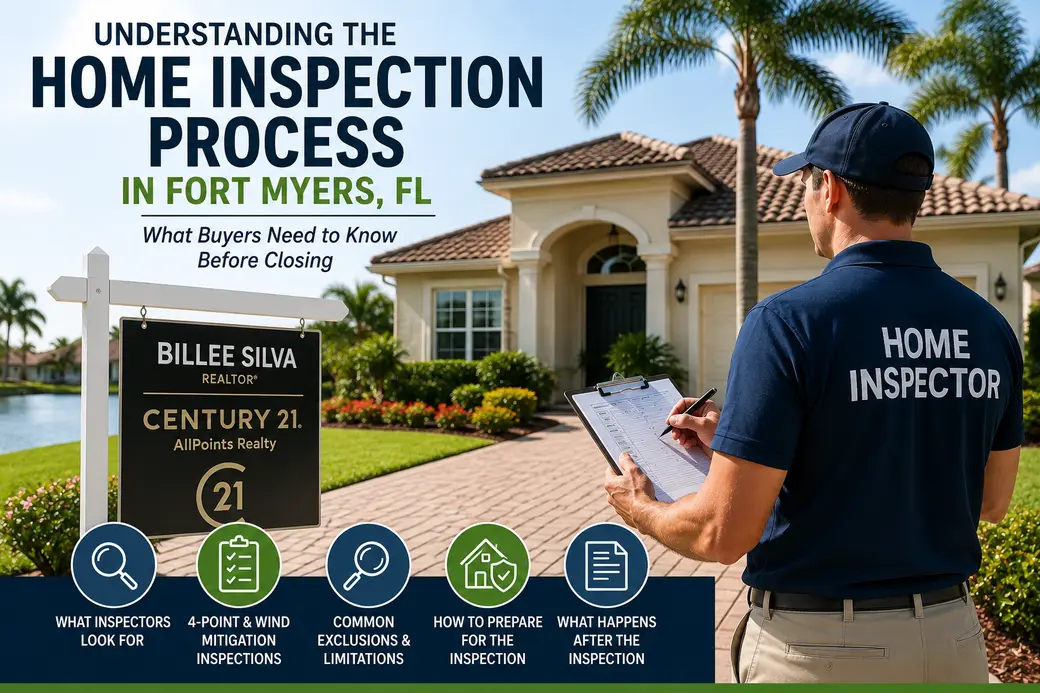
If you're buying a home in Fort Myers, the home inspection is one of the most important steps after going under contract. It gives you a closer look at the property's condition and can uncover issues that may not be obvious during a showing.
In Southwest Florida, inspections can be especially important because our heat, humidity, heavy rainfall, hurricane exposure, and insurance requirements can create concerns buyers from other parts of the country may not be familiar with.
If you're already under contract, understanding what happens after your offer is accepted can also help you see where the inspection fits into the overall Florida home-buying process.
What Happens During a Home Inspection in Fort Myers?
A home inspection is a visual evaluation of the accessible components of a property. The inspector looks for defects, damage, safety concerns, and systems or components that may need further evaluation.
A typical inspection may include the:
- Roof
- HVAC system
- Plumbing
- Electrical system
- Foundation and structural components
- Windows and doors
- Attic and insulation
- Interior and exterior
- Built-in appliances
The amount of time required depends on the home's size, age, condition, and the inspections being performed.
The inspector isn't there to determine whether you should or shouldn't buy the house. The goal is to provide information about the property's condition so you can make a more informed decision.
Why Are Home Inspections Important in Fort Myers?
Homes in Southwest Florida face conditions that aren't necessarily concerns in every part of the country.
Our climate can contribute to roof wear, moisture intrusion, pest activity, HVAC demands, and deterioration of exterior components.
Hurricanes and tropical weather also make the condition and construction of the roof, windows, doors, garage doors, and other components particularly important.
Buyers considering an older property may want to take an especially close look at major systems. Buying an older house in Southwest Florida can involve additional considerations such as the age of the roof, electrical system, plumbing, HVAC, and wind-mitigation features.
What Does a Home Inspector Look For?
A home inspector generally evaluates visible and accessible areas of the property.
Roof and Exterior
The inspector may look for damaged or missing roofing materials, evidence of leaks, deteriorated flashing, drainage problems, cracks, exterior damage, and other visible concerns.
Electrical System
The electrical panel, accessible wiring, outlets, switches, and other visible electrical components are typically evaluated for proper operation and potential safety concerns.
Plumbing
Inspectors generally check visible plumbing components, fixtures, drains, water pressure, water heaters, and accessible areas for signs of leaks or deterioration.
HVAC System
Air conditioning is particularly important in Fort Myers. The inspector will typically operate the system and evaluate accessible components for proper function and visible concerns.
Attic
The attic can provide important clues about a Southwest Florida home. Inspectors may look at insulation, ventilation, roof framing, signs of leaks, moisture, pest activity, and other visible conditions.
Interior
Windows, doors, ceilings, walls, floors, stairs, smoke detectors, built-in appliances, and other accessible interior components are generally included.
A standard inspection is primarily visual. Inspectors don't typically open walls or dismantle systems to determine what's happening inside inaccessible areas.
What Is a 4-Point Inspection?
One inspection Florida buyers frequently hear about is the 4-point inspection.
A 4-point inspection focuses on four major components:
- Roof
- Electrical
- Plumbing
- HVAC
This is different from a full home inspection. A 4-point inspection is often requested by an insurance company, particularly for an older home.
Because insurance can significantly affect the total cost of owning a home in Florida, buyers should discuss inspection requirements with their insurance professional as early as possible.
What Is a Wind Mitigation Inspection?
A wind mitigation inspection documents specific construction features that may help a home withstand wind damage.
The inspection may look at features such as:
- Roof shape and construction
- Roof-to-wall attachments
- Roof deck attachment
- Secondary water resistance
- Impact-rated windows and doors
- Hurricane shutters or other opening protection
The resulting report may help an insurance company determine whether the property qualifies for certain wind-mitigation discounts.
Wind mitigation is particularly relevant when evaluating an older home in Southwest Florida, since construction standards and hurricane-protection features can vary considerably depending on when the home was built and what improvements have been made.
Is a Termite Inspection Included?
Not necessarily.
A wood-destroying organism (WDO) inspection is separate from a standard home inspection. Because Southwest Florida's warm, humid climate creates favorable conditions for termites and other wood-destroying organisms, buyers may choose or be required to have a separate WDO inspection.
Your Realtor, lender, insurance professional, and home inspector can help you determine which inspections may be appropriate for the particular property and transaction.
What Isn't Included in a Standard Home Inspection?
A general home inspection doesn't cover everything.
Depending on the inspector and services ordered, separate inspections may be needed for:
- Pools and spas
- Septic systems
- Private wells
- Mold
- Radon
- Asbestos
- Termites and other wood-destroying organisms
- Sewer lines
- Specialized structural concerns
Buyers should ask the inspection company exactly what is and isn't included before the inspection.
Should Buyers Attend the Home Inspection?
When possible, I encourage buyers to attend at least part of the inspection, particularly the inspector's final walk-through.
It gives you an opportunity to see important findings firsthand and ask questions about the property.
A written report can contain dozens of pages and photographs. Seeing an issue in person often makes it much easier to understand what the inspector is describing.
What Happens if the Inspection Finds Problems?
Finding issues during an inspection doesn't automatically mean something is seriously wrong with the home.
Even well-maintained homes can have a long list of inspection findings. Some may be simple maintenance items, while others may require further evaluation.
Depending on the contract and inspection terms, buyers may have options after reviewing the results. The appropriate response depends on the severity of the findings, the terms of the contract, and the individual transaction.
For sellers, an inspection can also highlight items worth addressing before putting a property on the market. My guide to repairs to make before selling a house explains why some repairs may be worth addressing while others may not justify the expense.
How Should Sellers Prepare for a Home Inspection?
If your home is under contract and the buyer has scheduled an inspection, a little preparation can make the process easier.
Before the inspector arrives:
- Make sure utilities are turned on.
- Provide clear access to the electrical panel.
- Make the attic entrance accessible.
- Remove items blocking the HVAC equipment or water heater.
- Secure pets.
- Make sure the inspector can access the garage and exterior.
- Replace burned-out lightbulbs.
- Clear areas underneath sinks so plumbing is visible.
Sellers thinking about listing can take preparation a step further. Preparing a home for sale in Fort Myers before buyers begin touring the property can help identify maintenance and presentation issues before they become distractions.
What Happens After the Home Inspection?
After the inspection, the buyer typically receives a written report with photographs and descriptions of the inspector's findings.
The next step is to review the report carefully and determine which findings deserve additional attention.
A roof nearing the end of its useful life, for example, may warrant additional investigation because roof condition can affect maintenance costs and insurance options. Electrical, plumbing, HVAC, moisture, or structural concerns may also warrant evaluation by an appropriately licensed professional.
Buyers should also look beyond the physical condition of the house. Understanding flood zones and flood insurance in Fort Myers can be another important part of evaluating the overall cost and risk associated with a property.
Is a Home Inspection Pass or Fail?
No. A home inspection isn't a pass-or-fail test.
The purpose is to give the buyer more information about the property.
Nearly every home will have something noted on an inspection report—even newer homes. What's important is understanding which findings are routine maintenance and which could have a meaningful impact on the property's condition, insurance, safety, or future expenses.
The Bottom Line
A home inspection can help Fort Myers buyers better understand the property they're purchasing and identify potential concerns before moving forward.
In Southwest Florida, it is also important to consider inspections that may go beyond the standard home inspection, including wind mitigation, 4-point, WDO, pool, well, septic, or other specialized inspections when applicable.
Working with experienced local professionals can help you understand which inspections make sense for the property and how the findings may affect your purchase.
About the Author
Billee Silva, PA, ABR, SRS
Billee Silva is a Southwest Florida Realtor serving buyers and sellers throughout Fort Myers, Cape Coral, Estero, Bonita Springs, and surrounding communities. A local resident since 1994, she helps clients navigate the Southwest Florida real estate market with local knowledge, clear communication, and personalized guidance.
Categories
- All Blogs 399
- 55+ Communities 12
- Boating Communities 13
- First Time Home Buyer 143
- Flood Insurance 3
- Florida Lifestyle 69
- Foreclosures 2
- Fort Myers Market Update 4
- Fun Things to do in Lee County, Florida 37
- Golf Communities 23
- Home Buyer Tips 164
- Home Seller Tips 122
- Homeowner Tips 63
- Mortgage Tips 44
- Neighborhoods 72
- Schools 3
- Title & Escrow 4
- Title Insurance 5
Recent Posts





GET MORE INFORMATION

Billee Silva, PA, ABR SRS
Licensed Realtor License ID: P3275278
Licensed Realtor License ID: P3275278