
What Are CDD Fees in Florida? A Simple Guide for Home Buyers
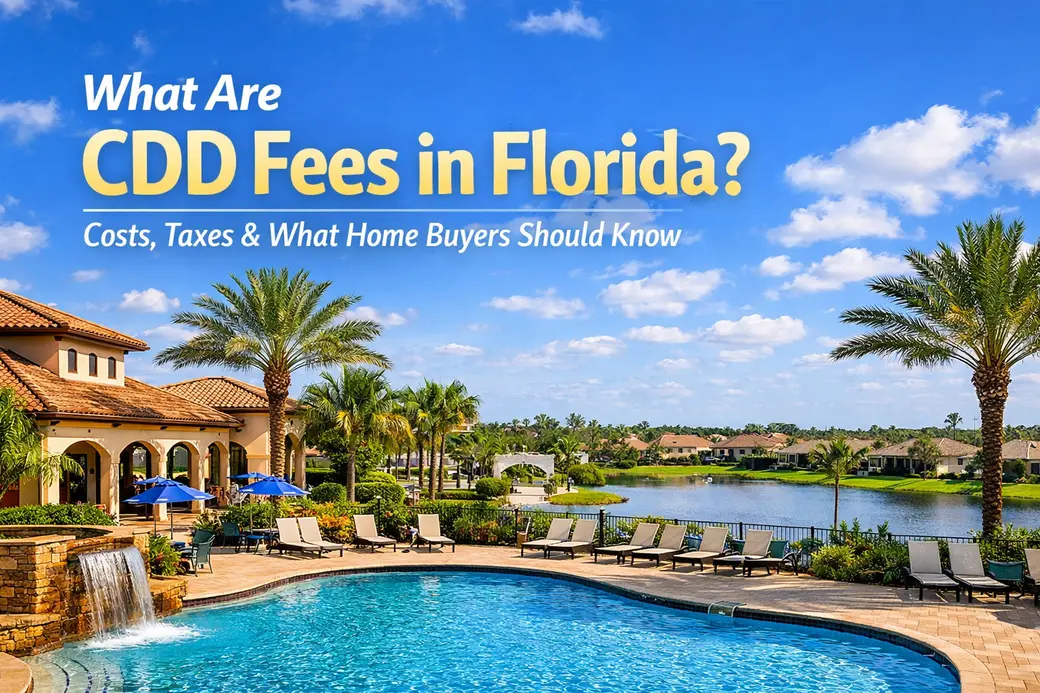
If you’re looking at homes in newer Florida communities, you may come across something called a CDD fee. Many buyers ask about it, especially those relocating to Southwest Florida.
Understanding what a CDD is, and how it affects your monthly costs, can help you make a smarter home-buying decision.
This article explains what a CDD fee is, how much it costs, and whether it’s worth it when buying a home in Florida.
What Does CDD Stand For?
CDD stands for Community Development District.
A Community Development District is a special-purpose local government entity created to finance and maintain infrastructure in a new community.
Instead of the developer paying for everything up front, the cost of building the community is financed over time and shared by the homeowners who live there.
These costs are repaid through CDD assessments added to your property tax bill.
What Do CDD Fees Pay For?
CDD fees are typically used to pay for the major infrastructure that makes a community livable and attractive.
This can include:
-
Roads and sidewalks
-
Water and sewer systems
-
Drainage systems and stormwater management
-
Community landscaping and entrance features
-
Parks and recreational areas
-
Clubhouses and fitness centers
-
Community pools and amenities
In many newer Florida communities, the CDD helped build the entire neighborhood from the ground up.
How Much Are CDD Fees in Florida?
CDD fees vary widely depending on the community and the amenities provided.
Typical CDD fees in Florida range from:
-
$800 to $3,500 per year
In some resort-style communities with extensive amenities, the fees may be higher.
Your CDD fee is usually included in your annual property tax bill, which means it’s often escrowed with your mortgage payment.
Two Types of CDD Fees
There are actually two parts to many CDD assessments.
1. CDD Bond (Debt Service)
This portion pays back the original bonds used to build the community infrastructure.
It usually lasts 20 to 30 years.
Once the bond is paid off, this part of the CDD assessment may disappear.
2. CDD Maintenance
This portion covers ongoing maintenance of community infrastructure and amenities.
Maintenance assessments usually continue as long as the community exists.
Are CDD Fees the Same as HOA Fees?
No. CDD fees and HOA fees are different.
HOA Fees
Homeowners Association fees typically cover:
-
Community rules enforcement
-
Landscaping in shared areas
-
Exterior maintenance (in some communities)
-
Community amenities and operations
CDD Fees
CDD fees typically cover:
-
Infrastructure construction and financing
-
Roads, drainage, and utilities
-
Large community infrastructure projects
Some communities have both HOA fees and CDD fees, while others may have one or the other.
Why Do Florida Communities Use CDDs?
CDD financing allows developers to build high-quality communities without dramatically increasing the price of each home.
Benefits often include:
-
Better infrastructure
-
Larger amenity centers
-
Resort-style pools and fitness facilities
-
Well-planned roads and landscaping
Without CDD financing, home prices in new communities would often be significantly higher.
Do All Florida Communities Have CDD Fees?
No.
CDD fees are most common in newer master-planned communities built in the last 20–30 years.
Older neighborhoods typically do not have CDD assessments because their infrastructure was built long ago and funded differently.
When comparing homes, you’ll often see:
-
Communities with no CDD but higher home prices
-
Communities with CDD fees but lower purchase prices
Are CDD Fees Tax Deductible?
Part of a CDD assessment may be tax deductible, particularly the portion related to infrastructure maintenance.
However, bond repayment portions typically are not deductible.
Because tax situations vary, buyers should always confirm with a tax professional or CPA.
Do CDD Fees Affect Home Value?
Not necessarily.
Many buyers are willing to pay CDD fees because they enjoy the amenities and infrastructure those fees provide.
Communities with strong amenities and well-maintained infrastructure often remain highly desirable and hold value well.
Frequently Asked Questions About CDD Fees
Do you pay CDD fees forever?
The bond portion usually lasts 20–30 years.
The maintenance portion may continue indefinitely.
Are CDD fees included in property taxes?
Yes. In most cases, CDD assessments appear on your annual property tax bill.
Can CDD fees increase?
Maintenance portions can increase if needed to maintain community infrastructure or amenities.
Can you pay off a CDD bond early?
In some communities, homeowners may be able to pay off the bond portion early, though this depends on the district.
The Bottom Line for Home Buyers
CDD fees are simply a financing tool used to build modern communities.
They help create neighborhoods with better infrastructure and amenities while keeping home prices more accessible upfront.
For many buyers relocating to Florida, the key is simply understanding the cost and what you’re receiving in return.
Thinking About Buying in Fort Myers or Southwest Florida?
Every community is different, and CDD fees can vary widely from neighborhood to neighborhood.
If you’re considering buying in Southwest Florida, it’s important to understand:
-
Which communities have CDD fees
-
How much they cost
-
What amenities and infrastructure they support
Working with a local expert can help you compare communities and avoid surprises.
Have questions about CDD fees or Southwest Florida communities?
I’m always happy to help buyers understand the true cost of living in different neighborhoods so they can make the best decision for their lifestyle and budget.
Categories
- All Blogs 399
- 55+ Communities 12
- Boating Communities 13
- First Time Home Buyer 143
- Flood Insurance 3
- Florida Lifestyle 69
- Foreclosures 2
- Fort Myers Market Update 4
- Fun Things to do in Lee County, Florida 37
- Golf Communities 23
- Home Buyer Tips 164
- Home Seller Tips 122
- Homeowner Tips 63
- Mortgage Tips 44
- Neighborhoods 72
- Schools 3
- Title & Escrow 4
- Title Insurance 5
Recent Posts




GET MORE INFORMATION

Billee Silva, PA, ABR SRS
Licensed Realtor License ID: P3275278
Licensed Realtor License ID: P3275278