
Financing a Condo vs. a Single-Family Home: What’s the Difference?
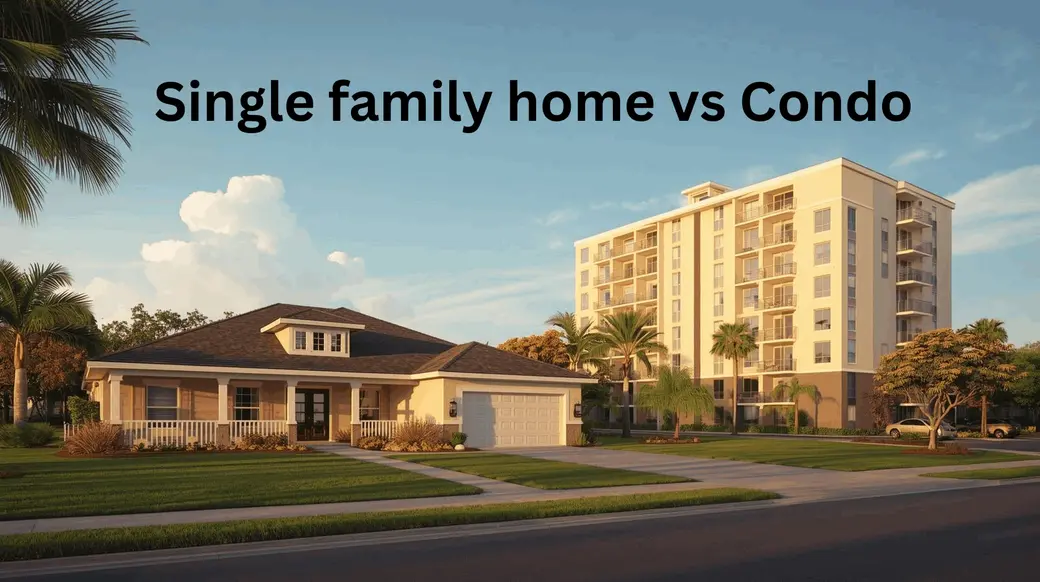
Buying a home is one of life’s biggest milestones, but if you’re deciding between a condo and a single-family home, it’s important to understand that the financing process isn’t quite the same.
Lenders view condos differently than single-family homes, which can impact your loan approval, down payment requirements, and even your interest rate. Let’s break down the key differences so you can make an informed decision before you start your home search in Southwest Florida.
1. How Lenders View Condos vs. Homes
When you buy a single-family home, you’re purchasing the house and the land beneath it. The property is completely yours, and lenders primarily evaluate your personal credit, income, and debt-to-income ratio to approve your loan.
Condos, on the other hand, involve shared ownership of common areas, things like pools, clubhouses, parking lots, and roofs. Because your ownership extends only to the interior of your unit, lenders must also review the financial health of the condominium association before approving your loan.
If the condo association is poorly managed, has low reserves, or too many delinquent owners, it can impact your ability to get financing.
2. Condo Project Approval Matters
For a condo purchase, lenders often require the community to be on the Fannie Mae or FHA approved list. These approvals ensure the project meets specific guidelines related to:
-
Budget reserves and insurance coverage
-
Percentage of owner-occupied vs. rental units
-
Delinquency rates on HOA fees
-
Pending litigation
If a condo is not approved, you may still be able to get financing, but it will likely require a higher down payment and stricter underwriting.
3. Down Payment and Loan Type Differences
For Single-Family Homes:
You can often use conventional, FHA, or VA loans with as little as 3–5% down (for qualified buyers). These loans tend to have flexible terms and lower costs.
For Condos:
Conventional loans are the most common. FHA and VA loans are available only for approved condo projects.
If the condo association isn’t approved, lenders may classify it as a non-warrantable condo, which often requires:
-
A minimum of 20–25% down
-
Higher credit scores
-
Limited loan programs
That’s why it’s crucial to have your Realtor and lender confirm a condo’s eligibility before making an offer.
4. HOA Fees and Budget Considerations
While both homes and condos can have homeowner association (HOA) fees, condo fees are typically higher because they include exterior maintenance, landscaping, insurance, and shared amenities.
When qualifying for your mortgage, lenders include monthly HOA fees in your debt-to-income ratio. So, a high HOA fee can reduce how much home you qualify for, even if the purchase price seems affordable.
Single-family homes typically have lower or optional HOA fees, depending on the community.
5. Insurance Requirements
Insurance coverage differs significantly between property types:
-
Single-Family Home: You’re responsible for insuring the entire structure and the land.
-
Condo: The association insures the exterior and common areas. You only need an HO-6 policy, which covers your unit’s interior, personal belongings, and liability.
This difference usually makes condo insurance less expensive, but the savings may be offset by higher HOA fees.
6. Appraisal and Loan Approval Process
Appraisals for single-family homes are straightforward, based primarily on comparable home sales in the area.
For condos, appraisers must also consider:
-
The building’s overall condition
-
Amenities
-
HOA financial health
-
Ratio of investor-owned units
These added factors can slightly lengthen the loan approval process and may affect valuation.
7. Pros and Cons from a Financing Perspective
| Feature | Condo | Single-Family Home | ||||||||||||||||||||||||||||||||||||||||||||||||||||||||
|---|---|---|---|---|---|---|---|---|---|---|---|---|---|---|---|---|---|---|---|---|---|---|---|---|---|---|---|---|---|---|---|---|---|---|---|---|---|---|---|---|---|---|---|---|---|---|---|---|---|---|---|---|---|---|---|---|---|---|
| Down Payment | Often higher (10–25%) | As low as 3–5% | ||||||||||||||||||||||||||||||||||||||||||||||||||||||||
| HOA Fees | Higher, but covers more | Lower, limited coverage | ||||||||||||||||||||||||||||||||||||||||||||||||||||||||
| Insurance Cost | Lower | Higher | ||||||||||||||||||||||||||||||||||||||||||||||||||||||||
| Loan Process | More documentation | More straightforward | ||||||||||||||||||||||||||||||||||||||||||||||||||||||||
| Maintenance | Association-handled | Owner’s responsibility |
8. How Your Realtor and Lender Work Together
When financing a condo, it’s critical to work with a Realtor who understands condo associations and lender requirements.
As your Realtor, I’ll:
-
Confirm whether a condo is warrantable
-
Communicate directly with the lender to ensure eligibility
-
Help you review condo documents and budgets
-
Keep deadlines on track to protect your escrow and financing contingencies
Your lender will review the condo questionnaire, association insurance, and budget before issuing a loan approval.
Final Thoughts
Financing a condo vs. a single-family home may involve a few extra steps, but with the right team guiding you, it’s a smooth and rewarding process.
Whether you’re drawn to the maintenance-free lifestyle of a condo or the privacy and space of a single-family home, understanding how financing works will help you make the best decision for your lifestyle and budget.
If you’re thinking about buying in Southwest Florida, let’s connect, I’ll walk you through the process, help you find the right lender, and make your purchase as seamless and stress-free as possible.
Categories
- All Blogs 397
- 55+ Communities 12
- Boating Communities 13
- First Time Home Buyer 142
- Flood Insurance 3
- Florida Lifestyle 69
- Foreclosures 2
- Fort Myers Market Update 4
- Fun Things to do in Lee County, Florida 37
- Golf Communities 23
- Home Buyer Tips 163
- Home Seller Tips 121
- Homeowner Tips 63
- Mortgage Tips 44
- Neighborhoods 72
- Schools 3
- Title & Escrow 4
- Title Insurance 5
Recent Posts



GET MORE INFORMATION

Billee Silva, PA, ABR SRS
Licensed Realtor License ID: P3275278
Licensed Realtor License ID: P3275278